The Benefit of Mobile ER Trailers
Mar
04
2019
White Papers
At big events they can help avert needs for transport and burdening local hospitals
Nearly every city has its own rendition of a marathon, triathlon, extreme obstacle course or swim competition. It is prudent to treat these events, based on their anticipated size, number of participants, and viewing capacity, as predetermined MCIs, each requiring its own disaster plan and risk-mitigation procedures.
Not every mass gathering will become an actual MCI. Fortunately, at fixed venues that host professional sports teams and collegiate sporting events, the patient presentation rate is really predictable and usually low- compared to nonfixed venues where events like music festivals typically take place. While there is always a concern that a mass gathering will become an MCI and/or proper disaster preparedness principles should be employed at every one of the fixed venues hosting sporting events.
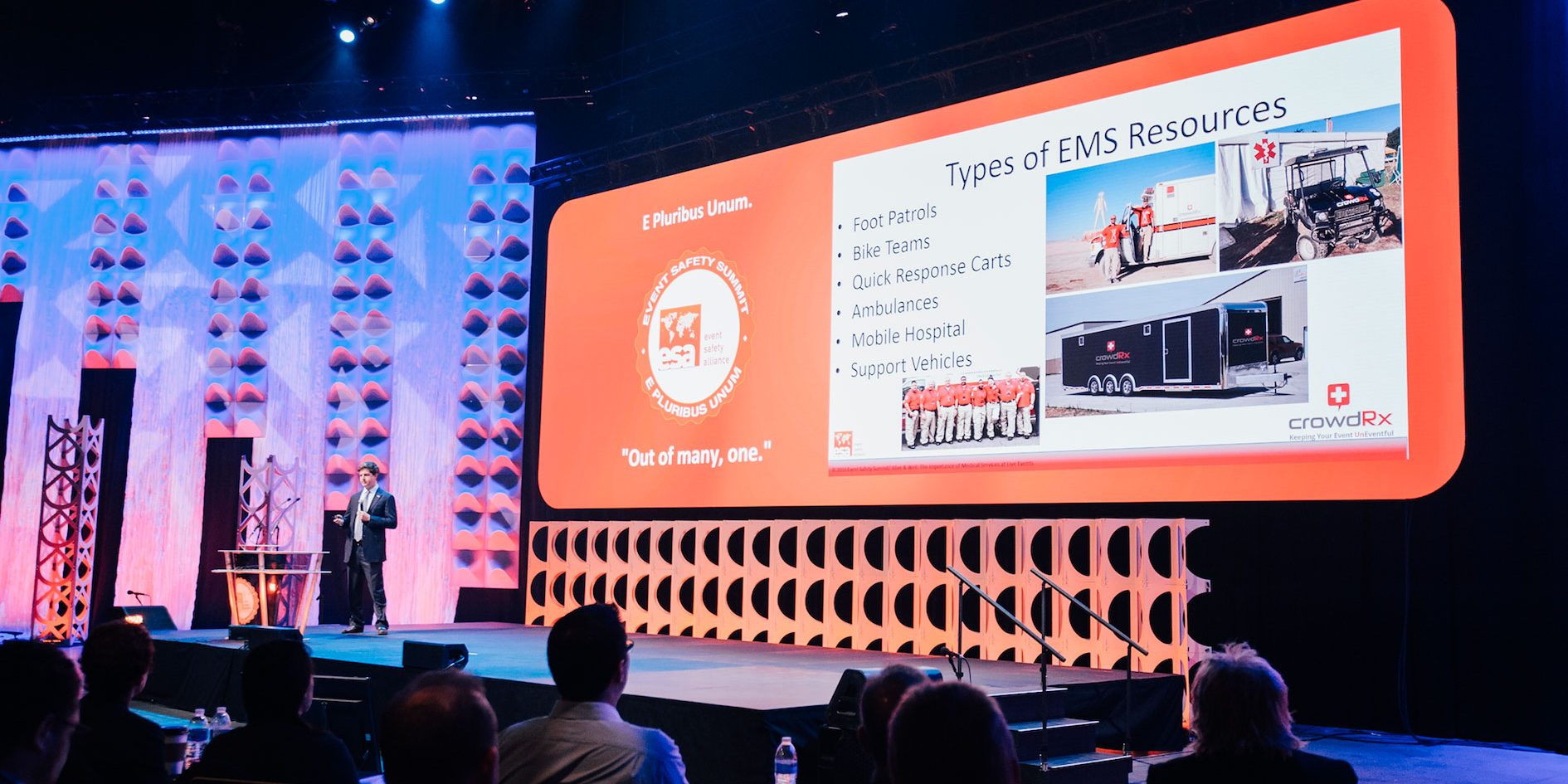
For EMS these events may require enhanced resources and more intense- site preparations. Preventative measures may include multidisciplinary and inter- agency briefing’s, increased numbers of medical staff, and potentially a mobile trailer capable of providing emergency care. The mobile emergency room trailer can have unique benefits at an MCI or mass gathering.
Controlled Environment
We frequently use the term controlled environment in EMS and emergency medicine. That patient with epiglottitis needs to be intubated in a controlled environment, so they should be taken to the OR. To performprocedural sedation to reduce the dislocated shoulder, we need a controlled environment. Essentially a controlled environment is a clean, relatively sterile workspace where you have the room, maneuverability, and equipment to handle the worst-case scenario.
If you anticipate a range of patient pre-sentations from asthma to contusions, lacerations, and dislocated extremities, there is a medical advantage to having a controlled environment on site. It provides room to treat all these patients in a humane environment, with each afforded the dignity, privacy, and appropriate care they deserve.
The real mortality benefit arises when you begin treating the critically ill, which is not infrequent at large mass gather-ings. Life threats can include hyponatremia leading to seizures, hyperthermia resulting in multi-organ failure, severe asthma exacerbation requiring ventilatory- tory support, excited delirium owing to drug-induced toxicity, cardiac arrhyth- mia, and, if not interrupted promptly, cardiac arrest.
A mobile ER trailer allows multiple providers to access a patient in extremis. An EMS provider can obtain intravenous access in the upper extremities while another places the patient on a cardiac monitor and obtains vital signs, while yet another is at the head, managing the air-way and comforting the patient.
Logistical Advantages
There are other positive aspects to staging medical crews at a mobile ER. Using trailers helps avoid overburdening other local healthcare resources not dedicated to the mass gathering. EMS (as well as police and fire), while having to deal with extra traffic and road closures, will have its same resources to respond and hopefully not have to divert units.
The host community does not have to worry that its local hospital will be overrun and struggle to provide care. Some communities have experienced problems with local ERs that were ill-equipped to handle the excessive patients they saw from a mass gathering. Mobile ER trailers can dramatically cut down on the number of those transported to hospitals.
Finally, mobile ER trailers give medical staff a place to congregate and escape from the elements and enjoy an opportunity to recharge. Whether they need to warm up, cool down, hydrate, or change clothes, on-scene medical providers are given a place to do it with dignity and respect, thus keeping them ready to handle any scenario that may arise.
ABOUT THE AUTHORS
Matt S. Friedman, MD, FACEP, DABEMS, is the Associate Medical Director of Prehospital Care and Director of the EMS Clerkship at Maimonides Medical Center, Brooklyn, NY, and national medical director of CrowdRx Inc., New York, NY.
Connor B. Fitzpatrick, AEMT, is an AEMT instructor, ALS supervisor, volunteer pilot for Airlift Services, and Chief Operating Officer at CrowdRx Inc.
Related Posts